OPG Supports the United Nations Sustainable Development Goals
OPG supports the achievement of the United Nations Sustainable Development Goals (UN SDGs). The SDGs are a collection of 17 interdependent global goals designed to be a blueprint to achieve a better and more sustainable future for all by addressing the world’s most pressing economic, social, and environmental issues. The SDGs were adopted in 2015 by the United Nations General Assembly and are intended to be achieved by 2030.
OPG supports the SDGs and is contributing towards the following 12 goals:
SDG 2: Zero Hunger
 Alignment with SDG target:
Target 2.4: By 2030, ensure sustainable food production systems and implement resilient agricultural practices that increase productivity and production, that help maintain ecosystems, that strengthen capacity for adaptation to climate change, extreme weather, drought, flooding and other disasters and that progressively improve land and soil quality.
OPG contribution toward SDG:
- For more than 50 years, OPG’s Pickering Nuclear GS has supplied the world with Cobalt-60 (Co-60), an isotope used to sterilize perishable foods such as fruits, meats, and spices, to prevent spoilage and help prevent foodborne illness.
- Today, Pickering Nuclear’s Units 5 to 8 provide about 20% of the world’s supply of Co-60, making Ontario one of the leading sources of this important product.
- In addition to the existing work being done on Co-60 at the Pickering GS, OPG has started work on installing Co-60 capabilities in all four units at Darlington Nuclear GS. The first Co-60 harvest out of Darlington is expected in the second half of this decade, helping to address a growing global need for sterilization.
SDG 3: Good Health and Well-Being
 Alignment with SDG target:
Target 3.4: By 2030, reduce by one third premature mortality from non-communicable diseases through prevention and treatment and promote mental health and well-being.
OPG contribution toward SDG:
- Nuclear stations are best known for their ability to generate abundant quantities of clean and reliable energy for millions of homes and businesses. A lesser-known function of Ontario’s nuclear reactors is their ability to produce many isotopes, including critical medical isotopes, that directly result in millions of people around the world enjoying a healthier and safer quality of life.
- For more than 50 years, OPG’s Pickering Nuclear GS has supplied the world with Cobalt-60 (Co-60), an isotope used to sterilize about 30% of all single-use medical devices, such as syringes, gloves, implants, and surgical instruments.
- Today, Pickering Nuclear’s Units 5 to 8 provide about 20% of the world’s supply of Co-60, making Ontario one of the leading sources of this important product.
- In addition to the existing work being done on Co-60 at the Pickering GS, OPG has started work on installing Co-60 capabilities in all four units at Darlington Nuclear GS. The first Co-60 harvest out of Darlington is expected in the second half of this decade, helping to address a growing global need for sterilization.
- OPG’s subsidiary, Laurentis Energy Partners (LEP) produces high-purity Helium-3 (He-3) to meet global demand. He-3 has many uses, including Magnetic Resonance Imaging (MRI). The He-3 is extracted from tritium stored at OPG’s Darlington station. LEP is also working with BWXT Medical Ltd. to harvest Molybdenum-99 (Mo-99) from Darlington’s Unit 2, making Darlington the only commercial-scale reactor in the world to produce this critical product. Mo-99 is a parent isotope of Technetium-99m, one of the most prevalent diagnostic imaging agents in nuclear medicine. Technetium-99m is used on skeletal, brain, and organ imaging to detect and diagnose cancer and various diseases. Once operational, the arrangement between LEP and BWXT will be capable of producing enough Mo-99 to supply a significant portion of the current and future North American demand for this important diagnostic imaging radioisotope.
- At Darlington Nuclear GS, LEP will also produce Yttrium-90 (Y-90), an injected radiopharmaceutical used to treat advanced liver cancer and other large inoperable tumors. Pending registration by the FDA, the Y-90 product will be distributed to more than 30 countries to treat advanced cancers all over the world.
- OPG promoted mental health and well-being in various ways, including through wellness campaigns and awareness sessions.
SDG 4: Quality Education
 Alignment with SDG target:
Target 4.5: By 2030, eliminate gender disparities in education and ensure equal access to all levels of education and vocational training for the vulnerable, including persons with disabilities, Indigenous Peoples and children in vulnerable situations.
OPG contribution toward SDG:
- OPG continues to support promising Indigenous students through the John Wesley Beaver Memorial Scholarships (JWBMS). Annual JWBMS scholarships are awarded in support of Indigenous students studying in the areas of administration, computer programming, computer, chemical and civil engineering, as well as law. The scholarship was established in 1995 and is named after notable engineer and leader, John Wesley Beaver, who was a fighter pilot during the Battle of Britain and Chief of Alderville First Nation before joining OPG’s predecessor company as a junior engineer in 1949.
- OPG’s community investment program, the Power for Change Project, is focused on giving in several focus areas, including empowering the next generation, which includes Science, Technology, Engineering, and Math (STEM) educational initiatives.
SDG 5: Gender Equality
Alignment with SDG target:
Target 5.5: Ensure women’s full and effective participation and equal opportunities for leadership at all levels of decision-making in political, economic and public life.
OPG contribution toward SDG:
- OPG’s 10-year ED&I Strategy (the Strategy), launched internally in 2021 and publicly in 2022, builds on the company’s ED&I promise to accelerate equity, celebrate diversity, and foster a culture of inclusion.
- In compliance with the Employment Equity Act, we continued progress on our Broader Employment Equity Plan to address historical and ongoing disadvantages faced by four designated groups: Indigenous Peoples, women, racialized people, and persons with disabilities. We expanded partnerships and outreach efforts to attract diverse candidates and strengthen the talent pipeline. Additionally, new resources and training were introduced to help hiring managers and recruiters promote equity in the interview and selection process.
- At the company’s highest levels, our Board of Directors continues to be highly diverse, and about 55% of the company’s executive team members are comprised of women.
SDG 6: Clean Water and Sanitation
Alignment with SDG target:
Target 6.6: By 2020, protect and restore water-related ecosystems, including mountains, forests, wetlands, rivers, aquifers and lakes.
OPG contribution toward SDG:
- OPG’s Regional Biodiversity Program complements our on-site work by helping to fund and promote efforts that contribute to the protection and restoration of sensitive habitat and habitat corridors across Ontario. As a member of the Ontario Biodiversity Council, OPG supports Ontario’s Biodiversity Strategy. The Strategy outlines the framework for the conservation of Ontario’s biodiversity by reducing threats, enhancing resilience, engaging people, and improving knowledge. Qualified conservation partners receive funding for projects that address key biodiversity issues in the areas of reforestation, wetlands, grasslands, and lakes and rivers. Our conservation partners also work with local Indigenous communities to ensure Traditional Ecological Knowledge is incorporated into restoration projects.
- OPG also supports initiatives that contribute to biodiversity education, awareness, and ecological land stewardship. Our partners include the Bruce Trail Conservancy, Earth Rangers, Local Enhancement and Appreciation of Forests (LEAF), and Ontario Nature. OPG continues to partner with the Lake Ontario Atlantic Salmon Restoration Program, also known as Bring Back the Salmon, to help restore a self-sustaining Atlantic salmon population to Lake Ontario and its tributaries.
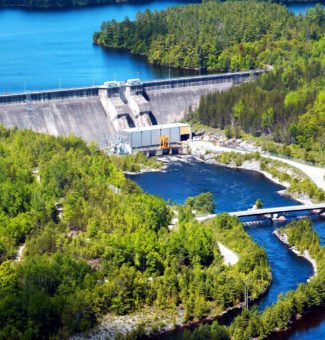
- As the operator of dozens of dams on rivers systems throughout the province, OPG takes a proactive approach to protect fish and fish habitat that may be impacted by the company’s activities. Measures include trap and transport programs, fish ladders, stocking programs, barriers and deterring structures, water flow alterations, habitat protection and creation, water quality monitoring, and station effluent temperature limits to manage and mitigate impacts to fish. OPG also works cooperatively with our regulators, the scientific community, and partner utilities to protect fish and fish habitat.
- OPG also carefully manages the quality of all wastewater discharged from its generating stations to the environment. All station wastewater effluent to the environment is required to meet strict site-specific compliance obligations. OPG regularly reports its wastewater monitoring results to various regulators such as Environment and Climate Change Canada, the Ontario Ministry of Environment, Conservation and Parks, and the Canadian Nuclear Safety Commission in accordance with regulatory requirements. These requirements include the National Pollutant Release Inventory, Environmental Compliance Approvals, and Nuclear Power Reactor Operating Licences.
SDG 7: Affordable and Clean Energy
Alignment with SDG target:
Target 7.1: By 2030, ensure universal access to affordable, reliable and modern energy services.
Target 7.2: By 2030, increase substantially the share of renewable energy in the global energy mix.
OPG contribution toward SDG:
- In 2014, we stopped burning coal to generate electricity. Today, Ontario’s electricity system has a lower average annual carbon intensity across its entire generation fleet than Canada as a whole, as well as most of the other G7 countries, such as the United States, Britain, and Germany.
- OPG continues to progress work on exploring new potential generation sites, Small Modular Reactors (SMRs), nuclear refurbishment, hydroelectric redevelopment and refurbishment, low-carbon hydrogen and energy storage, and electrification infrastructure projects.
- OPG prioritizes providing affordable power at competitive rates. We also strive to achieve optimal performance from our generating assets, by reinvesting in their longevity and by working diligently to keep operating costs low. As a result of these efforts, OPG helps moderate Ontario’s electricity rates by providing power that costs less than other generators.
- We’re also the only rate-regulated electricity generator in the province. In practice, this means that rates for most of our generating assets are set through public hearings with the Ontario Energy Board (OEB). As mandated by the OEB Act, these rate application proceedings are conducted in an open and transparent manner and OPG’s application documents are publicly disclosed on our website.
- During OPG’s rate application process, individual consumers or groups of electricity ratepayers may request to participate directly in the public hearings and inform the OEB’s decision on rates, which helps ensure OPG is accountable to Ontario’s consumers for our electricity rates. In 2021, OPG’s regulated rates were set for the 2022-2026 period.
SDG 8: Decent Work and Economic Growth
Alignment with SDG target:
Target 8.2: Achieve higher levels of economic productivity through diversification, technological upgrading and innovation, including through a focus on high-value added and labour-intensive sectors.
Target 8.5: By 2030, achieve full and productive employment and decent work for all women and men, including for young people and persons with disabilities, and equal pay for work of equal value.
Target 8.8: Protect labour rights and promote safe and secure working environments for all workers, including migrant workers, in particular women migrants, and those in precarious employment.
OPG contribution toward SDG:
- In addition to helping moderate Ontario’s electricity rates by providing power that costs less than other generators, OPG has significant direct and indirect impacts on the province’s economic and social fabric, including generating billions of dollars in net income for the Province over the last five years, directly employing thousands of skilled, dedicated people and supporting thousands of additional jobs across Ontario through our clean energy projects and supply chains.
- We spend billions of dollars annually to operate and maintain and invest in our facilities and assets. Our redevelopment, upgrades, and refurbishment projects inject millions of dollars into the economy. We purchase goods and services from numerous suppliers, the vast majority of which are local businesses.
- We are also making advances in our Reconciliation journey. In 2021, OPG launched its first ever Reconciliation Action Plan (RAP). Since that time, the RAP has guided our work with Indigenous communities, businesses, and organizations as we seek to grow economic benefits, increase Indigenous representation across OPG, and meaningfully advance Reconciliation. We are actively increasing the number of Indigenous businesses we purchase goods and services from and are developing partnerships with Indigenous communities that provide jobs, skills training, and lasting economic benefits.
- OPG puts the health and safety of its employees first and foremost. Pursuing safety excellence starts with our strong health and safety culture, which has been recognized with a number of industry awards over the years. Our commitment to health and safety excellence includes a framework of standards and procedures, mechanisms for continual improvement, and a team-oriented approach.
- Fostering positive labour relations is an important focus for OPG and greater than 80% of OPG’s regular workforce was represented by a union, including the Power Workers’ Union (PWU), the Society of United Professionals (Society), and several building trades unions.
SDG 9: Industry, Innovation and Infrastructure
Alignment with SDG target:
Target 9.1: Develop quality, reliable, sustainable and resilient infrastructure, including regional and transborder infrastructure, to support economic development and human well-being, with a focus on affordable and equitable access for all.
OPG contribution toward SDG:
- OPG continues to lead the development of Small Modular Reactors (SMRs), the next generation of clean, low-carbon and reliable nuclear power. OPG has partnered with GE Hitachi to bring the BWRX-300 SMR to Ontario for the Darlington New Nuclear Project (DNNP). The first BWRX-300 unit is planned to be deployed by the end of the decade. In 2023, the Ontario government announced it is working with OPG to commence planning and licensing for three additional SMRs, for a total of four, at our Darlington GS site. The three additional units are expected to be deployed in the mid-2030s. Once in-service, this SMR fleet will provide 1,200 MW of low-carbon power for Ontario, enough to power about 1.2 million homes. The project is expected to create and sustain 2,000 jobs each year in Canada over the next 65 years and will contribute $13.7 billion to Ontario’s GDP.
- OPG’s Renewable Generation division has advanced several clean energy projects, including refurbishment of several generating units and stations across our hydro fleet and the rehabilitation of multiple dam structures to ensure continued compliance with dam safety requirements.
- To ensure our low-carbon energy footprint, OPG continues to invest in our nuclear operations. This includes progressing the Darlington Refurbishment project, one of Canada’s largest clean energy infrastructure projects. The total project costs, including the impacts of the COVID-19 pandemic, are on track to meet the $12.8 billion budget.
- Once completed in 2026, the four-unit refurbishment will extend Darlington’s operating life by at least 30 years and have the same impact as removing two million cars per year from Ontario’s roads.
- Following the completion of OPG’s Board-approved feasibility assessment, in January 2024 the Province announced its approval of OPG’s plan to proceed with the project definition phase of refurbishing Units 5 to 8 at Pickering GS. Some of the major benefits of Pickering Refurbishment include securing 30-plus years of low-carbon power and maintaining thousands of skilled jobs. OPG is now proceeding with certain pre-execution phase activities, which include preliminary engineering work and securing long-lead components.
- OPG’s leadership in the push for electrification began a number of years ago with the launch of Plug’n Drive. Since that time, we have launched our subsidiary, PowerON Energy Solutions, to provide electrification and charging infrastructure for public transit agencies and corporate fleets, including its work with the Toronto Transit Commission (TTC) to electrify the TTC’s bus fleet – one of North America’s largest transit electrification projects to date.
SDG 10: Reduced Inequalities
Alignment with SDG target:
Target 10.2: By 2030, empower and promote the social, economic and political inclusion of all, irrespective of age, sex, disability, race, ethnicity, origin, religion or economic or other status.
OPG contribution toward SDG:
- In 2021, OPG launched its first ever Reconciliation Action Plan (RAP). Since that time, the RAP has guided our work with Indigenous communities, businesses, and organizations as we seek to grow economic benefits, increase Indigenous representation across OPG, and meaningfully advance Reconciliation.
- The RAP committed OPG to growing our economic impact for Indigenous communities and businesses by $1 billion by 2031, increasing Indigenous representation throughout the business, strengthening environmental stewardship, and improving understanding of Indigenous culture, history, and perspectives within the company.
- OPG’s 10-year ED&I Strategy (the Strategy), launched internally in 2021 and publicly in 2022, builds on the company’s ED&I promise to accelerate equity, celebrate diversity, and foster a culture of inclusion.
- In compliance with the Employment Equity Act, we continued progress on our Broader Employment Equity Plan to address historical and ongoing disadvantages faced by four designated groups: Indigenous Peoples, women, racialized people, and persons with disabilities. We expanded partnerships and outreach efforts to attract diverse candidates and strengthen the talent pipeline. Additionally, new resources and training were introduced to help hiring managers and recruiters promote equity in the interview and selection process.
- OPG also advanced its corporate commitment to ED&I at the enterprise and site levels through comprehensive programming, local ED&I committees, and province-wide employee resource groups. These structures provide ongoing support for ED&I policies, programs, and initiatives, and facilitate employee engagement and feedback, including networking opportunities, peer-to-peer discussion, and promotion of ED&I awareness.
- In 2024, we made significant progress on actions identified to support the ED&I Strategy and OPG was also the proud recipient of the Government of Canada’s 2024 Employment Equity Achievement Award in the Innovation category. This award highlighted our commitment to our values of Innovation and Inclusion and the company’s efforts for ED&I excellence.
SDG 12: Responsible Consumption and Production
Alignment with SDG target:
Target 12.5: By 2030, substantially reduce waste generation through prevention, reduction, recycling and reuse.
Target 12.6: Encourage companies, especially large and transnational companies, to adopt sustainable practices and to integrate sustainability information into their reporting cycle.
Target 12.7: Promote public procurement practices that are sustainable, in accordance with national policies and priorities.
OPG contribution toward SDG:
- OPG has an ongoing interest in reducing our environmental footprint and promoting circular economy principles. We regularly evaluate our waste management practices to identify opportunities for further waste reduction, increased efficiency, and innovation in reusing and recycling materials. To support this, we identify solid waste and recycling opportunities as part of work planning processes. All projects are required to have a waste disposal plan before work commences, which considers leading practices for waste minimization and recycling, where possible. Work groups are trained to follow site-specific waste procedures and Transportation of Dangerous Goods training requirements to ensure proper waste handling and packaging prior to disposal.
- Nuclear Sustainability is the division of OPG responsible for the safe management of nuclear waste and by-products from nuclear electricity generation, plant refurbishments, and future decommissioning projects. OPG takes a tremendous amount of care and pride in how we actively prevent, manage, and harness our waste and by-products.
- We have reduced our low-level waste (LLW) volumes through various processing methods, such as incineration and compaction, and we know we can reduce even more.
- OPG takes steps to promote sustainability and ethical practices within our supply chain. We take significant strides to align our suppliers with our core values and ESG goals.
- OPG works with a third-party service provider to evaluate key suppliers in several ESG areas. Suppliers are evaluated in the categories of environmental performance, labour and human rights, ethics, sustainable procurement, and carbon management. For certain suppliers, their performance was incorporated into their annual scorecard, with the ESG segment of the scorecard forming 25% of the total rating. This rating was shared as part of the supplier relationship management program.
- Suppliers continued to be onboarded to the supplier management program process, and as ESG evaluations of suppliers continue, corrective actions will be assigned to ultimately improve supplier performance.
- We will also continue to work with suppliers to obtain emissions data, which will help establish a baseline and reduce OPG’s Scope 3 GHG emissions.
- OPG procurement contracts are awarded following OPG’s established procurement activity procedures, with suppliers expected to ensure full compliance with OPG’s Supplier Code of Conduct and Code of Business Conduct in their business dealings with OPG. These requirements are part of commercial terms in our Agreements. Code of Conduct concerns are managed and investigated through our Ethics Department. Certain suppliers are subject to OPG audits and assessments, which are commensurate with their approved scope of work and specified quality requirements. OPG has numerous suppliers and is a proud supporter of local businesses.
SDG 13: Climate Action
Alignment with SDG target:
Target 13.1: Strengthen resilience and adaptive capacity to climate-related hazards and natural disasters in all countries.
Target 13.3: Improve education, awareness-raising and human and institutional capacity on climate change mitigation, adaptation, impact reduction and early warning.
OPG contribution toward SDG:
- Ontario’s electricity system has a lower average annual carbon intensity across its entire generation fleet than Canada as a whole, as well as most of the other G7 countries, such as the United States, Britain, and Germany.
- Having helped deliver one of the world’s largest specific climate actions with the closure of its fleet of coal stations, OPG launched our Climate Change Plan in 2020 to pursue two ambitious net-zero goals, which include becoming a net-zero company by 2040 and supporting broader economy-wide decarbonization by 2050.
- We intend to periodically review and update our Climate Change Plan to reflect our current climate-related initiatives and any changes to government policy, technology development, and electricity supply and demand expectations.
- OPG has internal governance in place to help the company deliver its Climate Change Plan and associated actions. We have established roles and accountability for the plan as well as a structure to oversee and implement the plan’s actions.
- Some of the key actions already underway to fulfill our climate goals include: exploring new potential generation sites, nuclear refurbishment activities, investing in SMRs, hydroelectric expansion and refurbishment, electrification initiatives, low-carbon hydrogen and energy storage development, and other climate change initiatives.
- In Ontario’s transition towards a clean energy future, natural gas generation plays an important role. Ontario’s energy transition requires refurbishing existing low-carbon electricity assets and building new generation. These large infrastructure projects can take a decade to plan and build. In the interim, we need a bridging solution, and that’s where gas comes in. With its ability to ramp up and down quickly, natural gas generation is an important enabler of intermittent renewable energy like solar and wind, providing back up when solar and wind power are incapable of being generated. This flexibility also allows natural gas plants to meet changes in demand as well as peaking needs, contributing to the stability of Ontario’s electricity grid.
- As part of our Climate Change Plan, OPG is also investigating the use of carbon offsets, including negative emissions technologies, and nature-based solutions to address residual emissions. OPG is also monitoring developments in carbon capture and sequestration, as well as early-stage developments of a regulatory framework to permit carbon sequestration in Ontario.
- To adapt and enhance the resilience of our operations, OPG has launched several initiatives including conducting climate risk and vulnerability assessments for some existing generation assets and new projects. We also assessed operations in areas of elevated baseline water stress, used scenario modeling to support adaption plans, and prioritized infrastructure improvements.
SDG 15: Life on Land
Alignment with SDG target:
Target 15.1: By 2020, ensure the conservation, restoration and sustainable use of terrestrial and inland freshwater ecosystems and their services, in particular forests, wetlands, mountains and drylands, in line with obligations under international agreements.
Target 15.8: By 2020, introduce measures to prevent the introduction and significantly reduce the impact of invasive alien species on land and water ecosystems and control or eradicate the priority species.
OPG contribution toward SDG:
- OPG is proud to work independently with several organizations to protect wildlife and restore ecosystems, and we do this with a focus on the four Rs of biodiversity stewardship:
- Retain what is ecologically significant.
- Restore habitats that have been degraded.
- Replace habitats that have been lost, where ecologically and economically feasible.
- Recover species that are at risk.
- Some of OPG’s key achievements over the years include planting more than 10 million native trees and shrubs and stocking more than seven million Atlantic salmon in local waterways.
- Our ongoing on-site and regional biodiversity programs also support our Climate Action Plan and Reconciliation Action Plan. The focus areas of these programs include land stewardship, monitoring species at risk, planting native species, managing invasive species, and preserving, restoring, and creating habitat for Ontario’s native flora and fauna.
- Qualified conservation partners receive funding for projects that address key biodiversity issues in the areas of reforestation, wetlands, grasslands, and lakes and rivers. Our conservation partners also work with local Indigenous communities to ensure Traditional Ecological Knowledge is incorporated into restoration projects.
- OPG also supports initiatives that contribute to biodiversity education, awareness, and ecological land stewardship. Our partners include the Bruce Trail Conservancy, Earth Rangers, Local Enhancement and Appreciation of Forests (LEAF), and Ontario Nature. OPG continues to partner with the Lake Ontario Atlantic Salmon Restoration Program, also known as Bring Back the Salmon, to help restore a self-sustaining Atlantic salmon population to Lake Ontario and its tributaries.
Related Information



Subscribe and stay informed
Sign up to receive the latest news, project updates, and event information from OPG.