Our reactors produce more than energy
Ontario's fleet of CANDU reactors have the power to create more than just power. OPG has enlisted its reactors in the creation of critical nuclear isotopes that help save lives and better society in Ontario and around the world. These Ontario-made elements are actively benefitting hospitals, patients, quantum computing, and a growing list of important applications.
OPG and its subsidiary, Laurentis Energy Partners (Laurentis), are leading the world in the harnessing of these radioactive isotopes and supplying the world with the fuel to power medical diagnoses, cancer treatments, food security, and even national security.

Learn more about Laurentis Energy Partners.
Isotopes are versions of the same element that have equal numbers of protons but different numbers of neutrons in their nuclei. These versions may be stable or radioactive forms of the element. The radioactive materials have a growing list of valuable applications. Today, you will find isotopes making life safer and accelerating science in many important ways.
Harnessing good
Let's take a closer look at some of the isotopes OPG and Laurentis are presently harvesting, and the good work they're doing around the world.
Cobalt-60
Ontario's CANDU reactors produce 50% of the world's supply of this isotope. Cobalt-60 (Co-60) emits gamma radiation which is an important weapon in the fight against bacteria, viruses, and other contaminants.

The power of OPG's Cobalt-60 is benefitting hospitals around the world. In fact, over 30% of the world's single-use medical devices are irradiated and sterilized using Cobalt-60. Countless infections have been prevented by ensuring surgical instruments, syringes, gloves, and implants have been properly sterilized.
Food security is another important use for Cobalt-60, with grains, meats and spices treated to ensure the safety of the foods we serve to our families.
Cobalt-60 is currently extracted from OPG's Pickering Nuclear Generating Station (NGS) every 24 to 30 months, when the reactors are shut down for planned maintenance. A single harvest from one Pickering reactor unit yields enough Co-60 to sterilize approximately 3.5 billion syringes.
At OPG's Darlington Nuclear station, its recently refurbished Unit 1 has been modified to make Cobalt-60 production possible and is now online. Modifications are ongoing to expand cobalt production capability to Darlington's three other units. The future of Cobalt-60 production in Ontario is very bright.
Tritium (H-3)
OPG is North America's only non-military supplier of Tritium (H-3). This radioactive isotope of hydrogen was once treated as waste but today is helping fuel research into long-lasting beta voltaic batteries and the promise of nuclear fusion. International research in the field of fusion power is accelerating and driving a rapid rise in global demand for this valuable isotope.
Tritium is also used in the production of self-powered lights, watch dials, and exit signs, and in various aspects of pharmaceutical research.
Formed in the heavy water that sustains the chain reaction in Ontario's fleet of CANDU reactors, Tritium is extracted, concentrated, and safely stored at OPG'S Tritium Removal Facility at the Darlington Nuclear Generating Station, the world's largest Tritium processing facility.

Helium-3 (He-3)
As stored Tritium decays, it creates another important and very rare isotope, Helium-3 (He-3). This stable non-radioactive and inert gas doesn't form naturally on Earth, but at Darlington Nuclear the Laurentis team is able to extract this valuable gas from the Tritium in storage using a custom-designed tool. This innovation has made Laurentis the world's largest civilian producer of the very rare isotope.
Helium-3 has many demands for its properties. Everything from Magnetic Resonance Imaging (MRI) to making our borders safer by detecting radioactive materials. Helium-3 is also used for quantum computing by reducing temperatures down to near absolute zero where giant calculations can take place with less noise and resistance.

Heavy water (D2O) and detritiation services
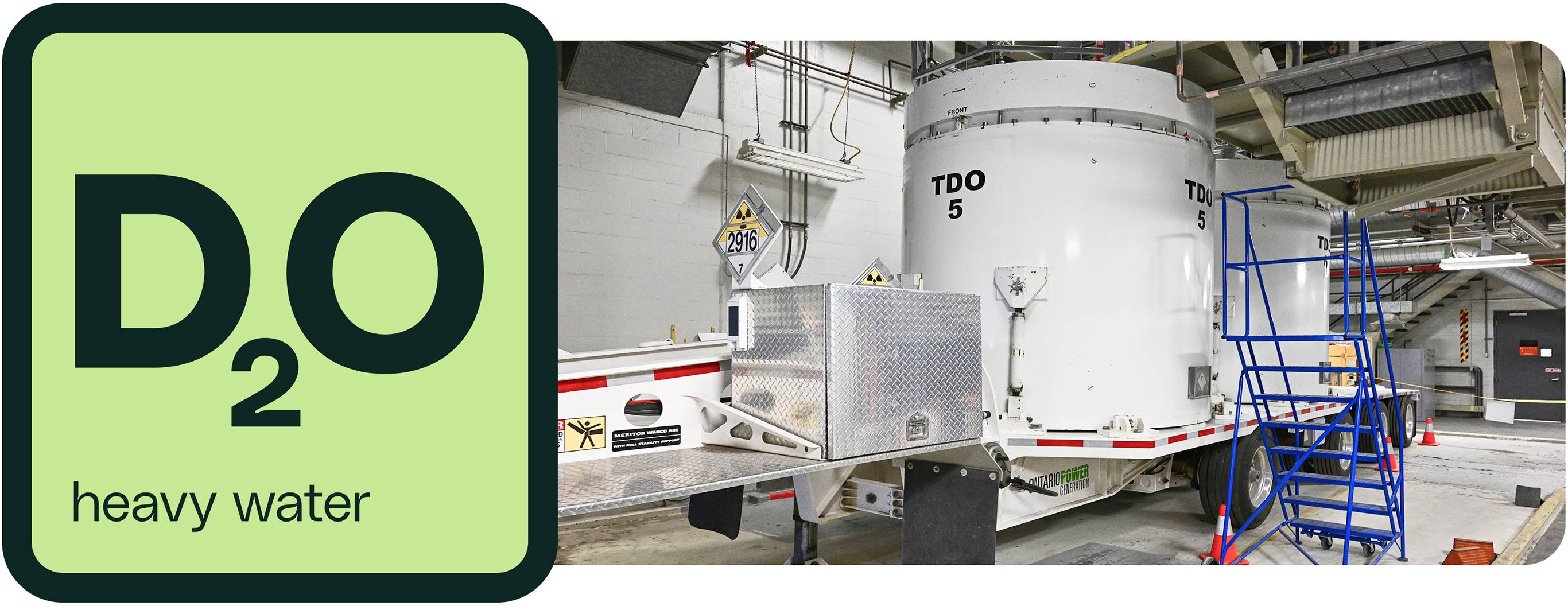
Heavy water (D2O) is very similar to regular water (H2O), but the hydrogen isotope, deuterium, is present instead of the more common protium. It looks the same, tastes the same, and a tiny bit of heavy water is naturally mixed in with the water we drink and use. This difference in chemistry enables the D2O to sustain the nuclear chain reaction.
OPG operates the world's largest and North America's only Tritium Removal Facility, located at Darlington Nuclear. Removal of tritium from the D2O (i.e., detritiation) enables reuse of the D2O for operational purposes and the ability to repurpose the extracted tritium.
Recently, Laurentis, in partnership with BWXT Medical, developed and installed the world's first Target Delivery System at OPG's Darlington Nuclear station's Unit 2, allowing for a reliable supply of a number of life-saving medical isotopes. This new system adds to an already impressive list of isotopes being harvested from Ontario's nuclear reactors.
The Target Delivery System is an isotope irradiation system that was specifically designed to take advantage of the unique design of CANDU reactors, allowing isotopes to be produced and harvested simultaneously while the nuclear reactor provides clean energy for millions of homes and businesses. Laurentis currently has one system installed at Darlington's Unit 2, and, pending regulatory approvals, will install a second system on Unit 3.
Molybdenum-99 (Mo-99)
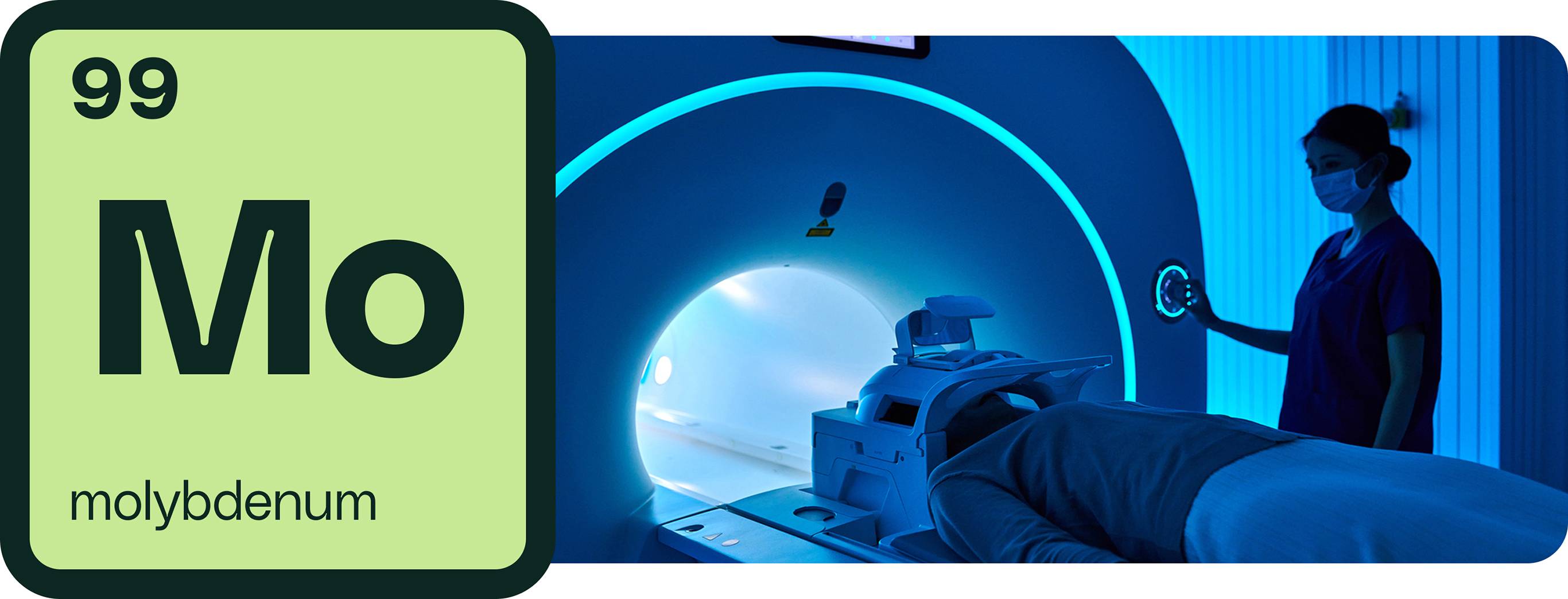
In 2024, Laurentis began harvesting Molybdenum-99 (Mo-99) using its Target Delivery System at Darlington Nuclear. The system makes Darlington the first commercial nuclear reactor to produce the isotope. Molybdenum-99 decays to Technetium-99m, which is used in over 30 million medical procedures each year to diagnose cancer, heart disease, and other illnesses. It's one of the most in-demand isotopes on Earth and it's made right here in Ontario.
Isotopes of tomorrow
The work to find new ways to harness the power of Ontario's CANDU reactors is ongoing.
Here are some more important isotopes that may soon be produced at OPG.
Carbon-14 (C-14)
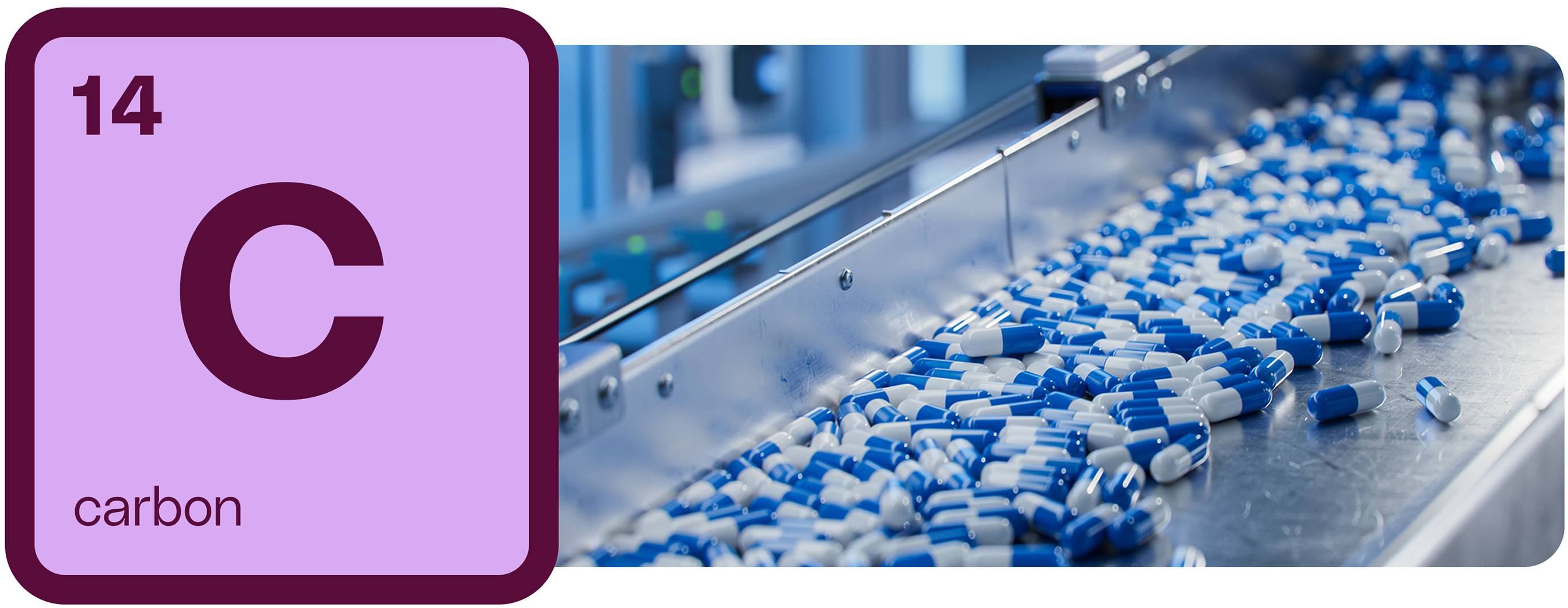
Carbon-14 (C-14) is a radioactive isotope of carbon that is not readily available in the current global market. Recently, OPG has taken steps forward to fill the void and provide a Canadian solution to meet the demand for this isotope.
Carbon-14 is used extensively in the life science industry as a biotracer in drug development. This important isotope is harvested and concentrated from the Carbon-14 already being stored as an intermediate-level waste product at OPG's Nuclear Sustainability Services' Western Waste Management Facility in Bruce County, using a new innovative system.
Not only will this supply Ontario and the world with a safe and reliable source of Carbon-14, it will also help reduce the amount of nuclear waste in storage.
Yttrium-90
Through Laurentis, the Target Delivery System installed at Darlington Nuclear will soon be irradiating Yttrium 89, transforming it into the powerful medical isotope Yttrium-90, pending regulatory approvals. This incredible isotope is revolutionizing cancer care. It's used in advanced, targeted treatments that destroy cancer cells and shrink large, aggressive tumors, particularly those found in the liver.
Once online, Yttrium-90 will be distributed to over 30 countries, helping to treat advanced cancers all over the world.

Lutetium-177
Lutetium-177 is a breakthrough isotope powering precision oncology, used in targeted radionuclide therapy to treat several types of cancer, including neuroendocrine tumors, prostate cancer, and breast cancer. It delivers radiation directly to cancer cells while minimizing damage to healthy tissue. Through Laurentis, pending regulatory approvals, production of Lutetium-177 is anticipated to begin at Darlington Nuclear in 2026.



Subscribe and stay informed
Sign up to receive the latest news, project updates, and event information from OPG.