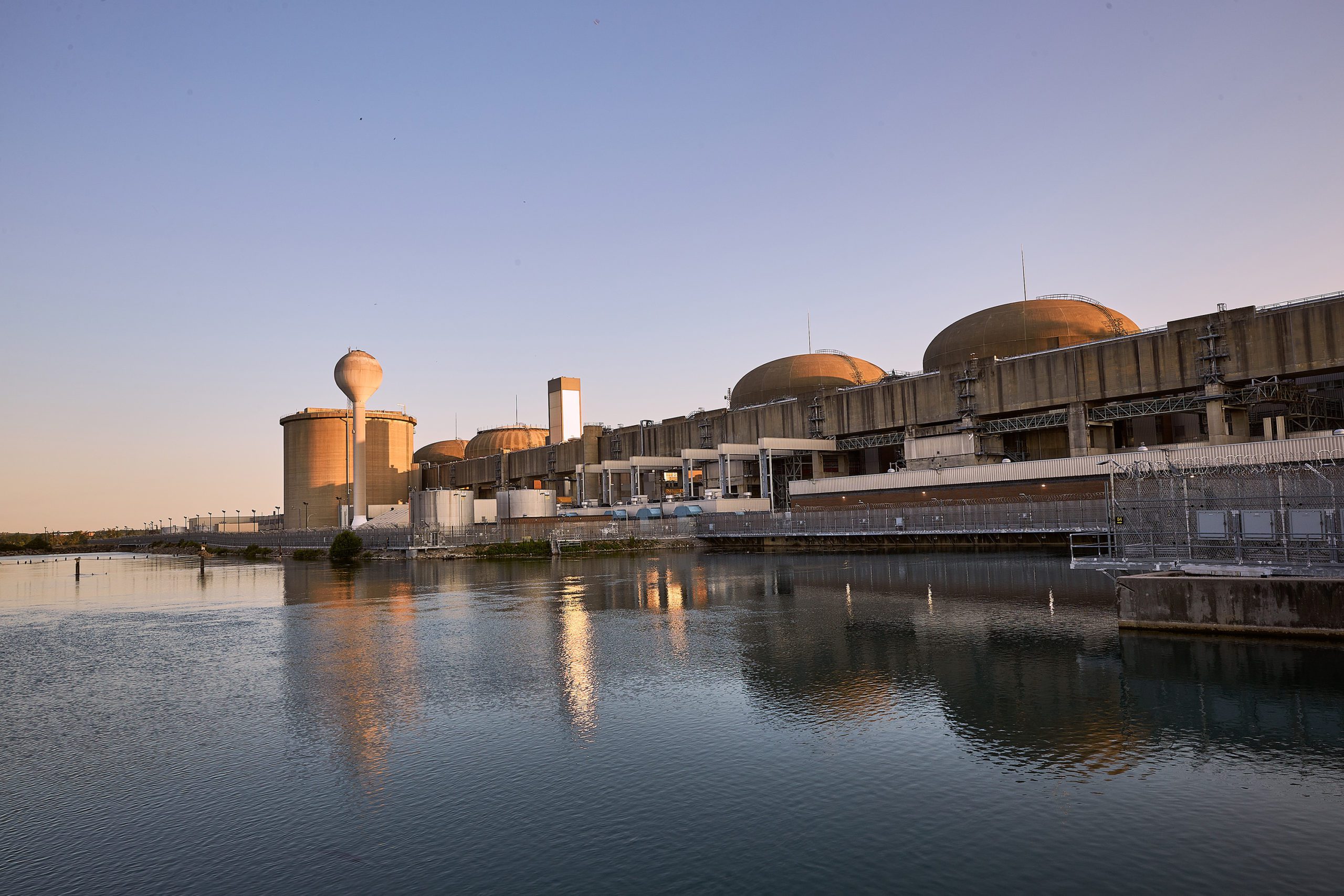
Located in Pickering (just east of Toronto), Ontario Power Generation's (OPG's) Pickering Nuclear Generating Station (GS) is one of the largest nuclear stations in the world and has been safely and reliably providing Ontario with power for decades.
Learn more about this world-class facility, which features four operating CANDU® reactors (CANadian Deuterium Uranium), and accounts for approximately 10% of Ontario’s electricity needs, while generating power that is virtually emissions-free.

Pickering nuclear operations
0
2100
megawatts is the total output at Pickering
0
4500
jobs protected until 2025
0
10
of Ontario’s electricity is produced at Pickering
0
21
megatonne reduction in CO2 emissions in 2026

Beyond 2026

Pickering has the opportunity to continue producing safe, reliable energy for Ontario by delivering another world-class refurbishment project for the benefit of generations to come.
With the support of the Province of Ontario, OPG is planning for the refurbishment of Pickering Nuclear’s Units 5 to 8, which will provide many benefits to customers, the economy, and the environment.
None of this would be possible without the support of our neighbours, the residents in the Pickering and Durham communities. We will continue to put our communities first as we continue to generate clean, reliable electricity for the people of Ontario.
Refurbishing Pickering will:
- Secure more than 2,100 MW of clean, reliable nuclear power for Ontario for another 30-plus years.
- Power two million homes and businesses across Ontario, safely and reliably.
- Maintain and secure highly skilled jobs.
- Create significant economic impact of more than $19 billion over the refurbishment period in Durham Region and across the province.
Pickering Licence Renewal
OPG has submitted an application to the Canadian Nuclear Safety Commission (CNSC) requesting renewal of the Pickering Nuclear Generating Station’s Power Reactor Operating Licence (PROL) for a 10-year term from Jan. 1, 2027 to Dec. 31, 2036. The application includes the request to undertake the planned refurbishment of Units 5 to 8 to continue operation for 30-plus years, to progress the decommissioning of Unit 1 to 4 as per the CNSC approved Detailed Decommissioning Plan (DDP), and to consolidate the licensed activities currently authorized under the Pickering Waste Facility Operating Licence (WFOL) with those under the Pickering NGS PROL to give a holistic view of generation and waste for managing the licence, based on feedback from intervenors as well as to streamline regulatory processes. The current licence for Pickering NGS expires on Aug. 31, 2028.
The CNSC will hold a 2-part public hearing in 2026 to consider the application from OPG.
- Part 1: June 23 2026
- Part 2: Week of Oct. 5, 2026
OPG has extensive experience operating nuclear stations safely and reliably for more than five decades. The Pickering NGS has proven to be a safe, reliable and important source of energy for the Province of Ontario while meeting the constant growth of energy needs.
For more information on the licence renewal process and opportunities for public participation, visit the CNSC webpage at www.cnsc-ccsn.gc.ca or visit our Operating Licences page.




Safety is our number #1 priority
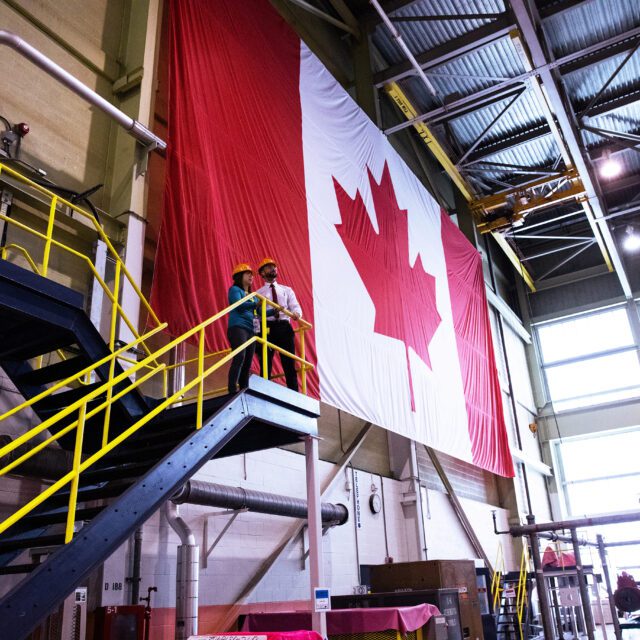
For decades, the Pickering Nuclear Generating Station has safely and reliably powered the lives of millions of Ontarians. The men and women who have devoted themselves to the station’s operations have done so with tremendous dedication, a steadfast commitment to meeting rigorous safety requirements and standards, and under the watchful eye of onsite CNSC staff.
Reactor buildings
Pickering reactor buildings are made of heavily reinforced concrete (walls 1.2 metres thick) to enclose the reactors and related equipment and shield personnel from radiation during operation.
Each building contains one reactor and twelve steam generators (boilers).
The reactor consists of a large, heavily shielded vessel or calandria, which contains 380 fuel channels and 4,560 bundles of uranium fuel encased in zircaloy sheathing.
Vacuum building
The vacuum building design is a unique safety feature of CANDU®(CANadian Deuterium Uranium) reactor.
This over 50 metre high cylindrical concrete structure is connected to the reactor buildings by a pressure relief duct.
Maintained at negative atmospheric pressure, any release of radioactive steam from the pressurized systems is sucked into the vacuum building and condensed, thus preventing its release outside the station.
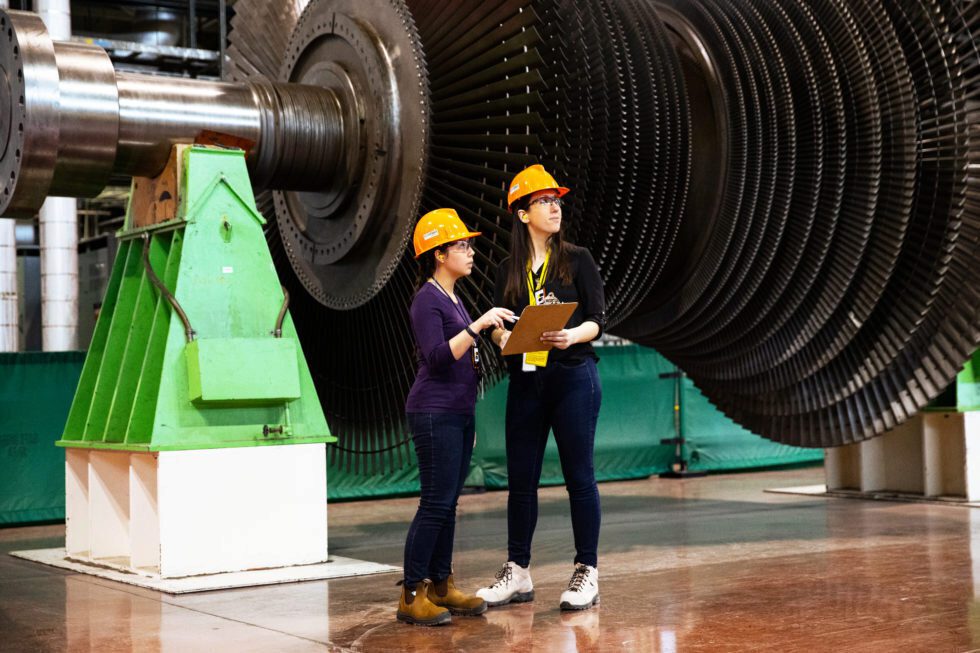
Turbine hall
This huge structure houses the turbines that the station uses to generate electricity. Each hall has 12 low pressure turbines, 4 high pressure turbines and 4 generators.

Nuclear power plant safety systems
Learn about the nuclear safety systems designed to keep you safe.

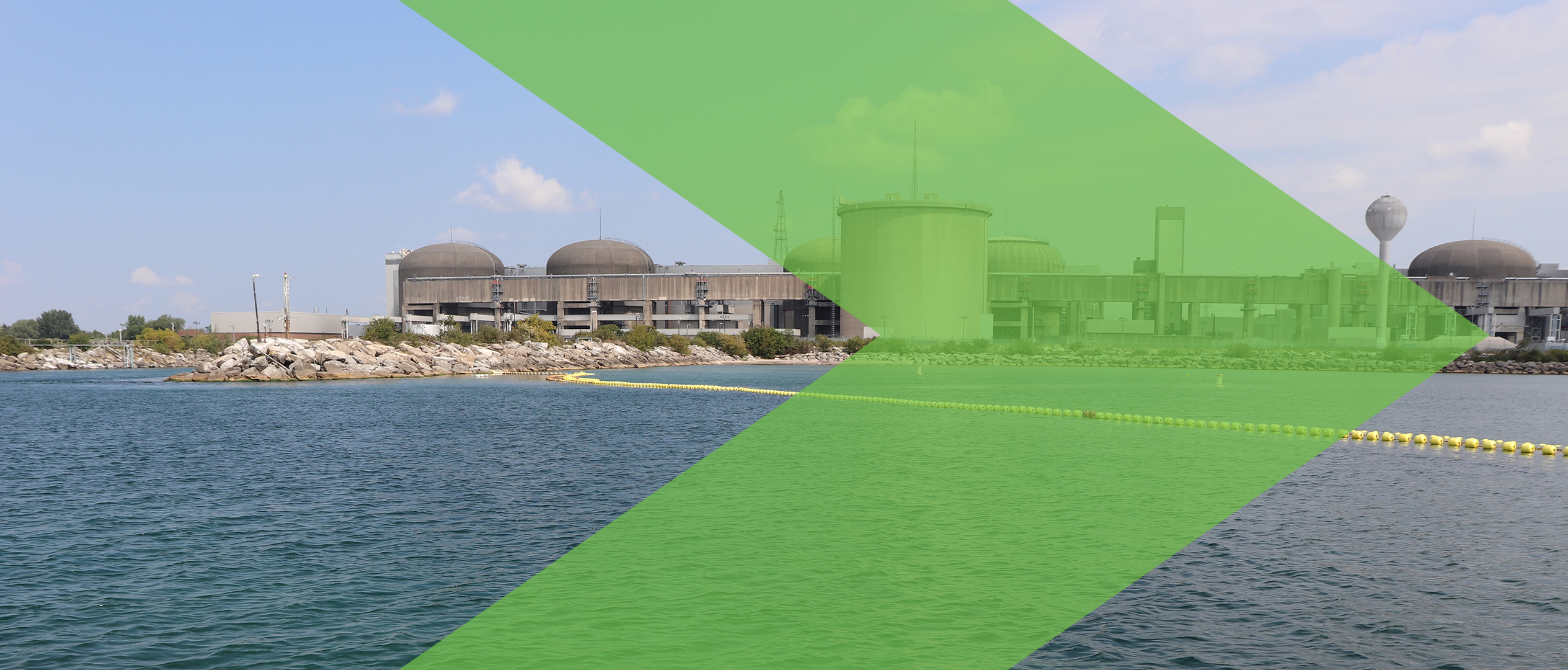

Our generating station


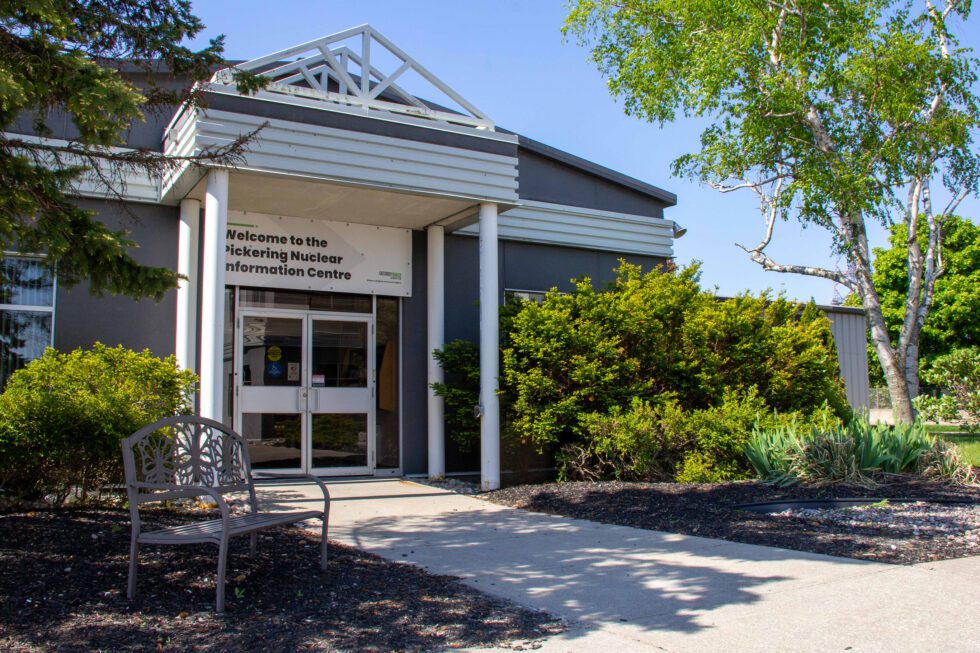
Pickering Nuclear visitor centre
1675 Montgomery Park Road
Pickering, Ontario
Open Monday to Friday (excluding holidays)
9 a.m. to 3:30 p.m.
Phone: 905-837-7272
Email: Please use our contact form
Explore nuclear
Subscribe and stay informed
Sign up to receive the latest news, project updates, and event information from OPG.